

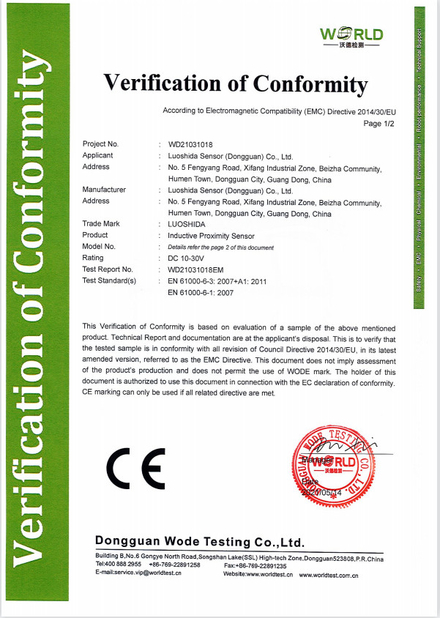
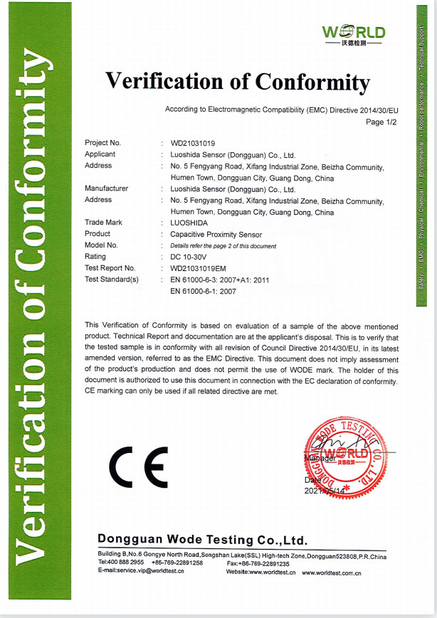

In industrial automation systems, proximity sensors serve as the "sense of touch" for machines, detecting the presence of nearby objects and triggering appropriate responses. Among the various types available, NPN and PNP configurations represent two fundamental wiring approaches with distinct operational characteristics and application scenarios. Selecting the appropriate type directly impacts system stability and reliability.
Consider this scenario: an automated production line where robotic arms must precisely grasp materials. An incorrectly chosen proximity sensor could cause false activations, potentially leading to production halts or even equipment damage. This makes understanding the differences between NPN and PNP sensors crucial for automation engineers.
NPN-type proximity sensors output a low-level signal (typically 0V) when detecting an object, effectively "pulling down" the signal line. In contrast, PNP-type sensors produce a high-level signal (usually matching the supply voltage), thereby "pulling up" the signal line. This fundamental difference stems from their internal transistor configurations.
PNP proximity sensors generally demonstrate superior performance in challenging industrial environments due to their high-level output signals, which offer enhanced resistance to electromagnetic interference. This makes them particularly suitable for applications with:
Additionally, many programmable logic controllers (PLCs) are designed to work optimally with PNP sensor inputs. However, NPN sensors may provide advantages in certain circuit configurations where low-level triggering simplifies logic implementation.
When choosing between NPN and PNP proximity sensors, engineers should evaluate multiple factors:
Consulting equipment manuals and technical specifications remains essential to prevent operational issues caused by incorrect sensor selection. Proper understanding and implementation of these sensor types ensures reliable performance in automated systems, minimizing downtime and maintenance requirements.
Contact Person: Mrs. Anna
Tel: 18925543310


 English


