

logo
Send Message
Home

blog about Guide to Selecting Proximity Sensors for Industrial Automation

Certification
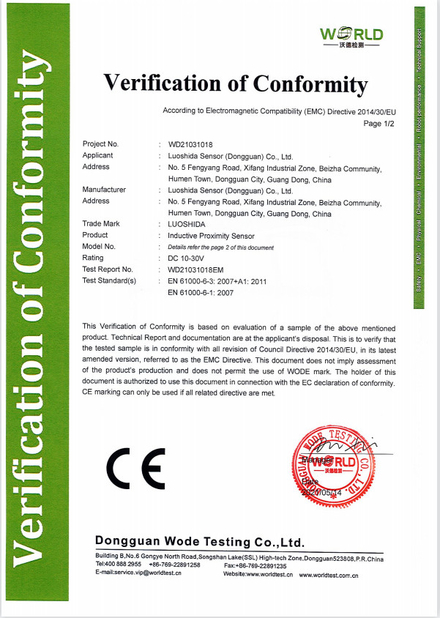
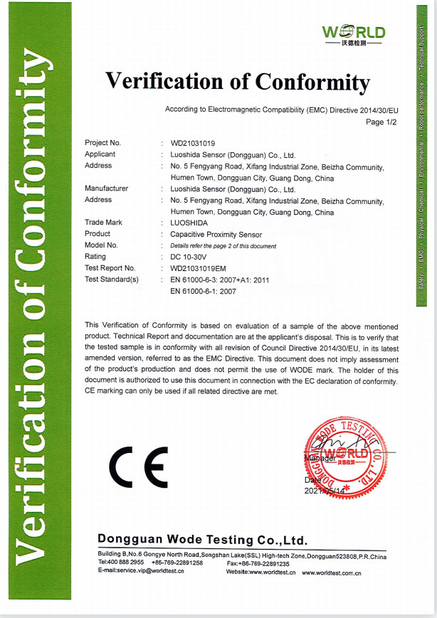
China Luo Shida Sensor (Dongguan) Co., Ltd. certification
I'm Online Chat Now
Company Blog
Guide to Selecting Proximity Sensors for Industrial Automation
Latest company news about Guide to Selecting Proximity Sensors for Industrial Automation

Imagine a production line where robotic arms precisely grasp materials without physical contact, achieving millimeter-level accuracy. This remarkable feat is made possible by proximity sensors – the indispensable "eyes" of industrial automation. These non-contact detection devices play a crucial role in enhancing efficiency and ensuring safety. However, with numerous options available in the market, how does one select the most suitable proximity sensor? This comprehensive guide examines sensor principles, types, advantages, limitations, and selection criteria to help optimize your automation systems.

Understanding Proximity Sensors

Proximity sensors detect the presence and position of target objects without direct physical contact. They operate on principles such as electromagnetic induction, capacitance change, or magnetic field sensing. Compared to traditional contact sensors, proximity sensors offer significant advantages: they prevent sensor wear and damage while minimizing risk to detected objects. While photoelectric sensors are technically classified as proximity sensors under JIS standards, engineers typically consider them distinct components in practical applications.

1. Inductive Proximity Sensors: The Metal Detection Specialists

Inductive proximity sensors, often simply called "proximity sensors" by engineers, are specifically designed for metal detection. They function through electromagnetic induction: the sensor generates a high-frequency magnetic field, and when metal objects approach, eddy currents form within them. These currents create secondary magnetic fields that interact with the sensor's original field, enabling detection.

Note that sensitivity varies across different metals. Aluminum, copper, and stainless steel generally show lower detection sensitivity than iron. Therefore, understanding your target material's properties is essential when selecting an inductive sensor.

1.1 Advantages of Inductive Sensors
  • Superior Environmental Resistance: Their fully enclosed design provides excellent protection against dust, water, and oil, ensuring stable operation in harsh conditions. The non-contact nature also reduces failure rates (with most failures occurring in sensor wiring).
  • Strong Anti-Interference Capability: Unlike photoelectric sensors that rely on light, inductive sensors are less affected by dust or dirt, minimizing false triggers and eliminating the need for protective housings.
1.2 Limitations of Inductive Sensors
  • Material Restrictions: Only detects metallic objects. For non-metallic materials like plastic or glass, engineers often use "dogs" – metal attachments that serve as detection proxies when mounted on non-metallic workpieces.
  • Short Detection Range: Typically limited to a few millimeters, requiring precise installation. Models with longer ranges tend to be bulkier.
  • Precision Constraints: Detection accuracy varies with approach angle, speed, and temperature. Parallel approaches show lower repeatability than axial approaches, especially at greater distances.
2. Capacitive Proximity Sensors: The Versatile Detectors

Capacitive sensors detect both metallic and non-metallic objects by measuring capacitance changes between the sensor face and target. As objects approach, the capacitance changes, triggering detection.

2.1 Advantages of Capacitive Sensors

Their primary strength lies in broad material compatibility, including plastics, paper, glass, liquids, and powders. Common applications include:

  • Liquid level monitoring in tanks
  • Material flow detection in hoppers
  • Workpiece presence verification on production lines
2.2 Limitations of Capacitive Sensors
  • Limited Range: While offering slightly longer ranges than inductive sensors (up to several centimeters), performance varies significantly with material properties, particularly with insulators.
  • Environmental Sensitivity: Prone to interference from dust and moisture, often requiring protective measures like optimized placement, protective covers, or sensitivity adjustments.
3. Magnetic Proximity Sensors: The Magnetic Material Experts

These sensors detect magnetic fields using magnetically sensitive components, making them ideal for monitoring magnetic materials. Typical applications include safety door position checks and pneumatic cylinder position detection.

3.1 Advantages of Magnetic Sensors
  • Adjustable Range: Detection distance can be increased by using larger magnets without significantly enlarging the sensor itself.
  • High Noise Immunity: Selective sensitivity to magnetic materials reduces false triggers.
3.2 Limitations of Magnetic Sensors
  • Material Constraints: Only works with magnetic materials (e.g., magnet-equipped cylinders).
  • Short Detection Distance: Generally offers limited range compared to other types.
4. Key Selection Criteria

Beyond sensor type considerations, these factors are critical for optimal selection:

4.1 Shielded vs. Unshielded

Shielded sensors incorporate metal rings around their detection faces to contain electromagnetic/electrostatic fields, preventing cross-talk in densely installed setups.

4.2 Normally Open (NO) vs. Normally Closed (NC)

Output configurations have important implications:

  • NO: Open circuit when inactive (no detection), closing upon detection – ideal for standard presence/position sensing.
  • NC: Closed circuit when inactive, opening upon detection – preferred for safety-critical applications as broken wiring triggers immediate alarms.

Note that output type is fixed per model and cannot be reconfigured, making careful specification essential.

Successful sensor selection requires balancing material properties, environmental conditions, detection requirements, precision needs, and safety considerations. A thorough understanding of sensor characteristics combined with application-specific evaluation ensures optimal performance in industrial automation systems.

Pub Time : 2026-05-20 00:00:00 >> Blog list
Contact Details
Luo Shida Sensor (Dongguan) Co., Ltd.

Contact Person: Mrs. Anna

Tel: 18925543310

Send your inquiry directly to us (0 / 3000)