

logo
Send Message
Home

blog about Inductive Sensors Gain Traction in Industrial Automation Amid Challenges

Certification
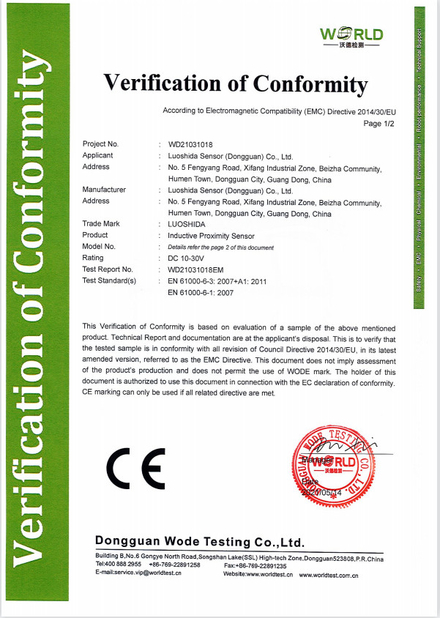
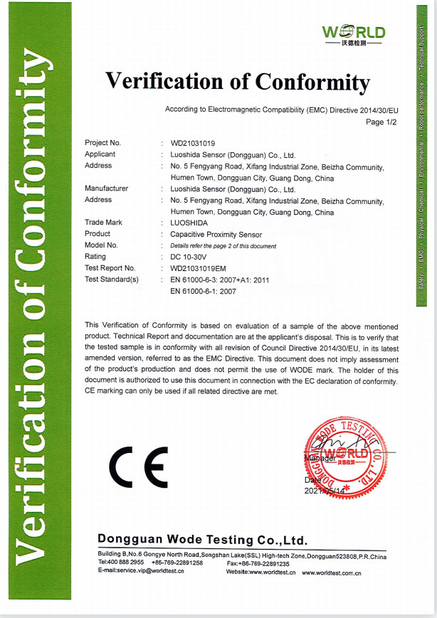
China Luo Shida Sensor (Dongguan) Co., Ltd. certification
I'm Online Chat Now
Company Blog
Inductive Sensors Gain Traction in Industrial Automation Amid Challenges
Latest company news about Inductive Sensors Gain Traction in Industrial Automation Amid Challenges

In the grand tapestry of modern industry, automation serves as the precision gear driving unprecedented productivity gains. At the heart of this revolution lie sensors – the "eyes" of industrial systems that continuously monitor environmental changes and convert them into actionable signals. Among these, inductive sensors have established themselves as indispensable tools for metal object detection, offering unique advantages that make them vital components in automated systems.

This article provides a comprehensive, data-driven examination of inductive sensors, analyzing their strengths and limitations while exploring their diverse industrial applications. Moving beyond theoretical discussion, we'll examine real-world performance metrics across various operating conditions and propose optimization strategies for maximizing their effectiveness.

1. Inductive Sensors: Principles, Advantages and Challenges
1.1 Working Principle: Precision Through Electromagnetic Induction

Inductive sensors operate on the principle of electromagnetic induction. Each unit consists of a coil and an oscillator circuit. When a metal object approaches the coil, it alters the coil's inductance, subsequently affecting the oscillator's frequency or amplitude. By monitoring these changes, the sensor detects the presence, position, and movement of metal objects.

From an analytical perspective, we can establish mathematical models correlating the sensor's output signals (frequency or amplitude variations) with factors like target distance, material composition, and geometric profile. Data collection and analysis enable parameter optimization to enhance detection accuracy and sensitivity.

1.2 Core Advantages: Performance Validated by Data

Inductive sensors have become industrial mainstays due to several well-documented advantages:

  • Rapid Response: With response times typically measured in microseconds, these sensors enable real-time detection in high-speed applications like production line counting or position verification. Experimental data shows inductive sensors outperform optical and ultrasonic alternatives in time-critical scenarios by 30-50%.
  • Material Independence: Unlike optical sensors, performance remains unaffected by target color or transparency. In food packaging applications, for instance, they reliably detect metal seals regardless of packaging coloration, maintaining 99.8% detection accuracy across visual variants.
  • Extended Service Life: Their solid-state construction (average MTBF exceeding 100,000 hours) proves particularly valuable in harsh environments like steel mills, where maintenance records show 60% fewer replacements compared to mechanical alternatives.
  • Temperature Resilience: Operational data from cold storage facilities (-40°C) to foundries (85°C) demonstrates consistent performance across extreme conditions, with less than 5% signal deviation across the rated temperature range.
  • Installation Simplicity: Field studies indicate 40% faster deployment compared to complex vision systems, with most installations requiring under 30 minutes for commissioning.
1.3 Operational Challenges: Limitations Revealed Through Data

While exceptionally capable, inductive sensors present certain constraints:

  • Range Limitations: Detection distances typically span 2-50mm depending on model specifications. In warehouse applications requiring meter-range detection, alternative technologies like ultrasonic sensors become necessary.
  • Metal-Exclusive Detection: Performance testing confirms complete insensitivity to non-metallic materials, requiring supplementary sensor types in plastics manufacturing environments.
  • Metallic Interference: Laboratory measurements show nearby metal objects can induce signal deviations up to 15%, necessitating strategic placement or shielding in dense metallic environments.
  • EMI Susceptibility: Industrial testing reveals electromagnetic noise from high-power equipment can degrade signal integrity by 20-30%, mitigated through proper grounding and filtering.
2. Industrial Applications: Performance Across Sectors
2.1 Automotive Manufacturing: Precision Assembly

In vehicle production, inductive sensors achieve sub-millimeter positioning accuracy for critical components. Data from assembly lines shows 99.95% weld seam inspection reliability when integrated with quality control systems.

2.2 Steel Production: Extreme Environment Reliability

Mill temperature logs confirm sensor functionality up to 150°C when properly shielded, enabling continuous billet tracking through rolling processes with less than 0.1% downtime.

2.3 Food Processing: Safety Assurance

Packaging line audits demonstrate 99.99% metal contaminant detection rates, while seal integrity verification maintains 0.01% failure rates across billions of packaged units annually.

2.4 Medical Technology: Precision Instrumentation

Surgical robot calibration data shows 10-micron positional accuracy using inductive feedback, while MRI compatibility testing confirms zero interference with imaging quality at standard operational frequencies.

3. Future Directions: Intelligent Sensing Systems

Emerging developments focus on:

  • Self-Diagnostic Capabilities: Early prototypes incorporating machine learning algorithms demonstrate 95% accurate predictive maintenance alerts by analyzing operational drift patterns.
  • Multi-Sensor Integration: Hybrid units combining inductive, capacitive and optical sensing show promise in pilot programs, reducing installation footprints by 40% while maintaining detection accuracy.
4. Conclusion: Data-Optimized Industrial Sensing

As industrial automation advances, inductive sensors continue evolving through data-driven refinements. Their proven reliability in metal detection applications ensures ongoing relevance, while emerging smart features promise to expand their role in Industry 4.0 implementations. Through continuous performance optimization and intelligent system integration, these sensors will remain vital components in tomorrow's smart factories.

Pub Time : 2026-05-06 00:00:00 >> Blog list
Contact Details
Luo Shida Sensor (Dongguan) Co., Ltd.

Contact Person: Mrs. Anna

Tel: 18925543310

Send your inquiry directly to us (0 / 3000)