logo
メッセージを送る
ホーム

ブログ について Guide to Choosing Hightemp Sensors for Extreme Conditions

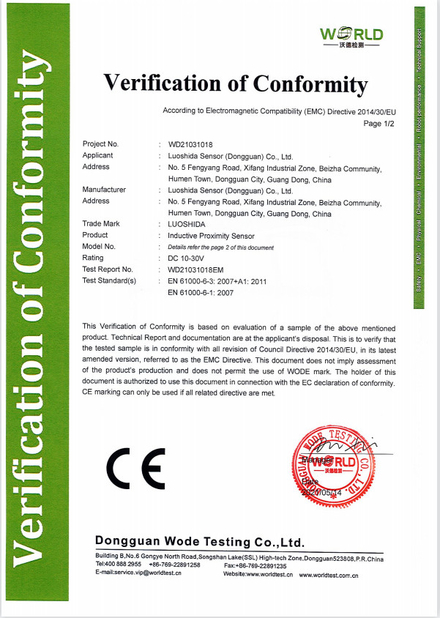
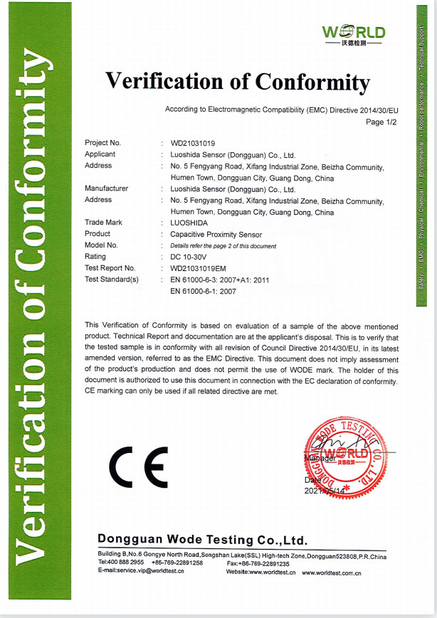
認証
中国 Luo Shida Sensor (Dongguan) Co., Ltd. 認証
オンラインです
会社 ブログ
Guide to Choosing Hightemp Sensors for Extreme Conditions
最新の会社ニュース Guide to Choosing Hightemp Sensors for Extreme Conditions

Imagine standing next to a blazing furnace, inside a high-speed jet engine, or deep within a geothermal power plant. In these extreme environments, accurate temperature measurement is crucial. While conventional sensors fail under such conditions, high-performance temperature sensors continue to operate reliably. But how do you select the right sensor for your specific application? This comprehensive guide examines various high-temperature sensor types, their characteristics, applications, and the latest technological advancements to help you make an an informed decision.

What Are High-Temperature Sensors?

High-temperature sensors are specialized devices designed for precise temperature measurement in extreme heat conditions. Unlike standard sensors, they incorporate unique materials and structures to withstand high temperatures, corrosion, vibration, and other harsh environmental factors while maintaining measurement accuracy and reliability. These sensors play vital roles in metallurgy, automotive, aerospace, and energy industries, ensuring production safety, efficiency improvements, and process optimization.

Key Features of High-Temperature Sensors:
  • Specialized materials resistant to extreme heat
  • Robust construction for harsh environments
  • Maintained accuracy under thermal stress
  • Long-term reliability in continuous operation
Major Types of High-Temperature Sensors

The market offers three primary high-temperature sensor types: thermocouples, resistance temperature detectors (RTDs), and infrared sensors. Each operates on different principles with distinct advantages and limitations.

Thermocouples: The Versatile Workhorse

Thermocouples function based on the Seebeck effect, where two dissimilar metals joined together generate voltage proportional to temperature differences.

Advantages:

  • Wide measurement range: -200°C to over 2000°C (depending on metal types)
  • Durable construction: Simple design withstands harsh conditions
  • Fast response: Quickly reacts to temperature changes

Limitations:

  • Lower accuracy compared to RTDs
  • Requires cold junction compensation
  • Nonlinear output requires calibration

Typical Applications: Metallurgy, chemical processing, power generation (e.g., boiler monitoring, furnace control)

Resistance Temperature Detectors (RTDs): Precision Measurement Specialists

RTDs operate on the principle that metal resistance changes predictably with temperature.

Advantages:

  • High accuracy: Ideal for precision measurements
  • Excellent linearity: Simplifies data processing
  • Long-term stability: Minimal drift over time

Limitations:

  • Narrower range (-200°C to 850°C)
  • Slower response than thermocouples
  • Higher manufacturing costs

Typical Applications: Laboratory equipment, pharmaceutical manufacturing, precision instruments

Infrared Sensors: Non-Contact Measurement Solutions

Infrared sensors detect temperature by measuring an object's thermal radiation.

Advantages:

  • Non-contact operation: Measures moving or hazardous objects
  • Instant response: Captures rapid temperature changes
  • Extreme range capability: -50°C to over 3000°C

Limitations:

  • Sensitive to environmental interference
  • Accuracy depends on surface emissivity
  • Premium models command higher prices

Typical Applications: Steel production, glass manufacturing, plastic processing

Critical Features of High-Performance Sensors

Beyond basic functionality, premium high-temperature sensors offer enhanced capabilities:

  • Extended temperature ranges: Special ceramic-encased thermocouples withstand 2300°C+ environments
  • Superior durability: Materials like silicon carbide (SiC) resist extreme heat and corrosion
  • Rapid response: Thin-film platinum RTDs deliver near-instant readings
  • Enhanced accuracy: Advanced calibration algorithms minimize errors
  • Smart functionality: Integrated wireless communication enables remote monitoring
  • Self-diagnosis: Automated system checks detect potential failures
Industry Applications

High-temperature sensors serve critical functions across multiple sectors:

  • Industrial manufacturing: Monitoring metal smelting, glass production, ceramic firing
  • Aerospace: Jet engine turbine blade temperature supervision
  • Energy production: Optimizing gas turbines, nuclear reactors, geothermal systems
  • Automotive: Engine exhaust and braking system management
  • Scientific research: High-temperature material property analysis
Emerging Technological Trends

The sensor industry continues to evolve with several key developments:

  • Wireless connectivity: Eliminating cabling for easier installation
  • Smart sensors: Incorporating self-calibration and diagnostics
  • Miniaturization: MEMS technology enables tiny, embeddable sensors
  • Advanced materials: Wide-bandgap semiconductors like GaN improve performance
  • IoT integration: Networked sensors enable comprehensive system monitoring
Selection Criteria

Choosing the optimal sensor requires careful consideration of:

  • Temperature range: Ensure adequate operating margin
  • Accuracy needs: Match precision requirements to application
  • Environmental factors: Consider humidity, corrosion, vibration
  • Response speed: Select based on process dynamics
  • Installation method: Choose appropriate mounting configuration
  • Total cost: Evaluate long-term value, not just initial price
Future Outlook

As Industry 4.0 advances, high-temperature sensors will play increasingly vital roles in smart manufacturing, energy optimization, and safety systems. Future developments will focus on enhanced intelligence, miniaturization, and seamless integration with industrial networks, supporting next-generation technological infrastructure across multiple sectors.

パブの時間 : 2026-05-04 00:00:00 >> blog list
連絡先の詳細
Luo Shida Sensor (Dongguan) Co., Ltd.

コンタクトパーソン: Mrs. Anna

電話番号: 18925543310

私達に直接お問い合わせを送信 (0 / 3000)