


Imagine being able to precisely identify the position, movement, and even material properties of metal objects without physical contact. This isn't science fiction but the reality enabled by inductive sensors. These devices function like invisible detectives, using subtle changes in electromagnetic fields to silently safeguard efficiency and safety across various demanding environments.
Inductive Sensors: The Elegance of Electromagnetic Induction
As their name suggests, inductive sensors operate based on the principle of electromagnetic induction. When electric current flows through a coil, it generates a magnetic field. Conversely, a changing magnetic field induces current in the coil. Inductive sensors cleverly exploit this phenomenon by detecting how metal objects influence magnetic fields to identify and measure targets.
Unlike traditional sensors that rely on light or sound, inductive sensors remain unaffected by environmental factors like lighting conditions, dust, or moisture, maintaining reliable performance even in harsh industrial settings.
Working Principles: Faraday's Law in Practice
The core functionality of inductive sensors stems from Faraday's Law of Electromagnetic Induction, which states that a changing magnetic flux through a closed loop induces an electromotive force (voltage). Specifically, when a metal object approaches a sensor's coil, it alters the surrounding magnetic field distribution, consequently changing the coil's inductance. This variation can be precisely measured electronically to determine the object's presence, distance, or movement.
Types of Inductive Sensors: Diverse Applications
Different operational methods and applications have led to several inductive sensor variants:
Oscillating Inductive Sensors
Operation: These sensors contain an oscillating circuit with a coil and capacitor. Approaching metal objects alter the coil's inductance, changing the circuit's frequency or current, which indicates the object's presence and distance.
Features: High sensitivity, rapid response, simple structure, and low cost.
Applications: Metal detection, proximity switches, and position control in applications ranging from underground metal detectors to automated production line monitoring.
Differential Inductive Sensors
Operation: These employ multiple differentially connected coils. Metal objects near one coil create inductance differences that reveal position and displacement.
Features: High precision, strong interference resistance, and excellent linearity.
Applications: Precision measurement, displacement detection, and pressure sensing in applications like machine tool positioning and pressure measurement systems.
Eddy Current Inductive Sensors
Operation: These generate alternating magnetic fields that induce eddy currents in nearby metals, creating opposing fields that affect sensor inductance, allowing material identification.
Features: Material-specific detection, immunity to non-metals, and strong interference resistance.
Applications: Metal sorting, material identification, and non-destructive testing in industries from scrap recycling to aerospace component inspection.
Industry Applications
Industrial Automation
They enable precise workpiece positioning in automated assembly lines, facilitate material tracking in smart warehouses, and support environmental perception for robotic navigation.
Automotive Electronics
Applications include engine parameter monitoring for optimal control, wheel speed detection for ABS/ESC systems, and obstacle detection in autonomous driving technologies.
Consumer Electronics
These sensors power metal detectors, enable proximity-based screen activation in mobile devices, and facilitate wireless charging systems.
Aerospace
They contribute to flight control surface monitoring, engine parameter tracking, and structural health assessment for aircraft maintenance.
Transportation
Road-embedded inductive loops enable intelligent traffic light control, vehicle counting/classification, and parking space occupancy detection.
Specialized Implementations
Inductive Proximity Sensors
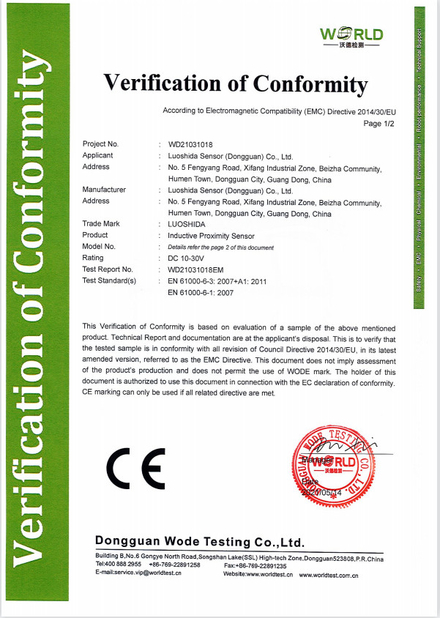
These non-contact switches detect metal approach through inductance changes, offering wear-free operation with rapid response. They serve as positioning aids, safety limit switches, and rotational speed monitors in industrial settings.
Search Coil Magnetometers
Critical for geophysical studies, space plasma research, and natural electromagnetic wave observation, these instruments rely on inductive sensor technology.
NMR Applications
As radiofrequency coils in nuclear magnetic resonance systems, inductive sensors enable microscopic material analysis for chemical, biological, and medical research.
Future Outlook
As a mature sensing technology, inductive sensors continue evolving toward miniaturization, enhanced intelligence, and greater precision. Emerging applications include contactless smart home controls and advanced medical diagnostics, promising to further transform technological landscapes across industries.
Contact Person: Mrs. Anna
Tel: 18925543310


 English


