


Imagine an automated production line where a high-speed robotic arm precisely handles materials of various compositions. Behind this seamless operation, different sensors silently provide accurate position and status information. Among these, inductive and capacitive sensors serve as critical components for non-contact detection, playing pivotal roles in industrial automation and smart manufacturing. But what exactly distinguishes these two sensor types, and how should one choose between them for specific applications? This article provides an in-depth analysis of their working principles, characteristics, and applications to guide optimal selection.
Before examining inductive and capacitive sensors specifically, it's essential to understand their broader category—proximity switches or proximity sensors. These devices detect target objects without physical contact, typically by emitting electromagnetic signals and monitoring changes in the returned signals. When an object enters the sensor's detection range, variations in signal strength, frequency, or other characteristics trigger switching actions.
Compared to traditional contact sensors, non-contact proximity switches offer significant advantages:
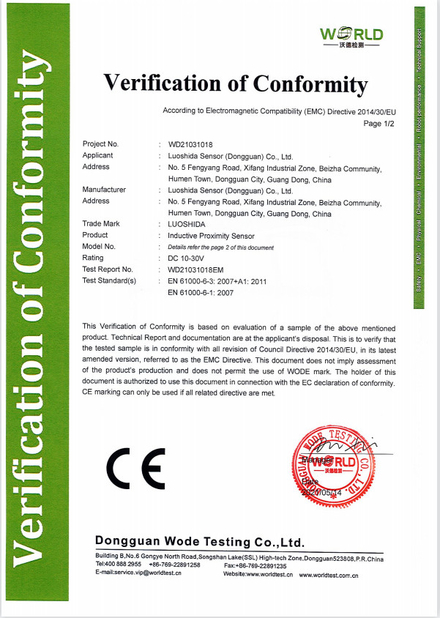
Inductive proximity switches are designed specifically for metal detection, unaffected by target shape or color. They offer cost-effectiveness and high reliability. These sensors operate based on inductance changes, containing an electromagnetic oscillation circuit with a coil. When metal approaches, it alters the coil's impedance, changing the circuit's oscillation amplitude or frequency. The sensor detects these variations to determine metal presence.
Inductive sensors employ electromagnetic induction. A coil in the sensor head generates an alternating magnetic field when energized. Nearby metal objects produce eddy currents that influence the coil's field, modifying its inductance and impedance. Internal circuitry converts these changes into switching signals.
Analogous to metal detectors, these sensors identify metal by inductance changes rather than reflected waves. A key advantage is their insensitivity to non-conductive materials like plastic, rubber, or stone, preventing false triggers from surface contaminants or light exposure—crucial for reliable operation in demanding environments.
Common inductive sensors feature cylindrical M18 housings with M12 connectors and 8mm detection ranges. Typical models include:
The reduction factor accounts for varying metal conductivity affecting detection distances. For instance, aluminum or copper may significantly reduce effective range compared to ferrous metals. Selection must consider target material and consult manufacturer reduction factor tables for accurate performance.
Industrial uses include:
High-hygiene environments: Food/beverage industry applications like cleaning agent valve control demand IP69K-rated sensors (e.g., PFM series).
Material alignment: Precise conveyor placement requires reliable detection (e.g., AE1/AP-3A with 2mm range).
Gear monitoring: Transmission synchronization via gear tooth detection (e.g., AK1/AP-1H).
Harsh conditions: Stainless steel sensors (e.g., FMK6/BP-3H) withstand corrosive/chemical exposure with IP67-69K ratings.
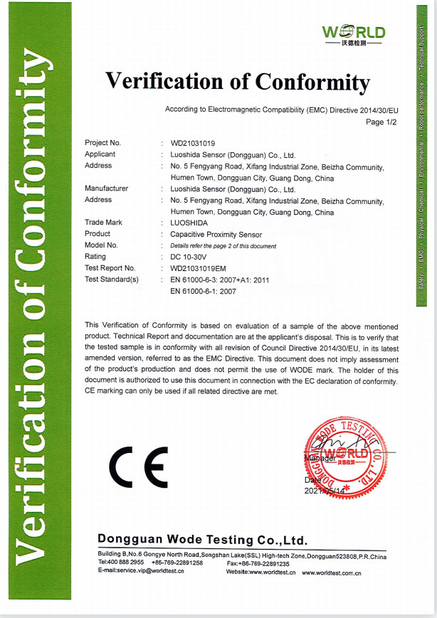
Unlike inductive sensors, capacitive variants detect both metals and non-metals—including liquids, solids, and powders. They operate via capacitance changes, where approaching objects alter the dielectric constant between electrode plates, converted into switching signals.
Capacitive sensors create an active field where objects modify the dielectric constant—a measure of charge storage capacity. Different materials produce distinct capacitance changes detected by internal circuitry.
Primary uses include:
Available configurations:
Liquid level control: External tank monitoring (e.g., C18P/BP-1E with 8mm range).
Beverage filling: Bottle content verification (e.g., C18P/BP-2E, 12mm range).
Non-metal counting: Detection of glass, paper, or plastic items (e.g., C30P/BP-2E for packaging).
Both sensor types offer:
Consider these aspects when choosing:
Inductive and capacitive sensors serve distinct yet vital roles in industrial automation. Inductive models excel in metal detection with precision and reliability, while capacitive variants offer material versatility for liquid and non-metal applications. Understanding their principles and characteristics enables optimal selection—enhancing efficiency, reducing costs, and ensuring system stability.
Contact Person: Mrs. Anna
Tel: 18925543310


 English


