

logo
پیام فرستادن
خانه

وبلاگ در باره Capacitive Vs Inductive Sensors Key Selection and PCB Design Tips

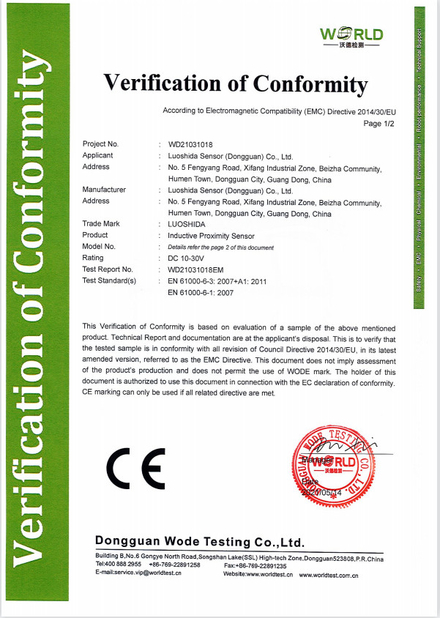
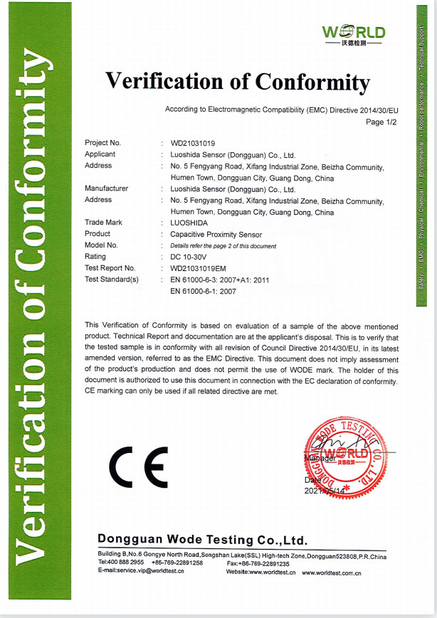
گواهی
چین Luo Shida Sensor (Dongguan) Co., Ltd. گواهینامه ها
چت IM آنلاین در حال حاضر
شرکت وبلاگ
Capacitive Vs Inductive Sensors Key Selection and PCB Design Tips
آخرین اخبار شرکت Capacitive Vs Inductive Sensors Key Selection and PCB Design Tips

In today's rapidly evolving field of electronic system design, sensors play a crucial role as bridges connecting the physical and digital worlds, providing critical data for various applications. From monitoring environmental parameters to controlling industrial processes, sensors are ubiquitous, with their diversity often overwhelming designers. Among the numerous sensor types, position sensors are particularly common, serving as indispensable components in automation, robotics, medical devices, and other fields.

In the realm of non-contact sensors, capacitive and inductive sensors have gained significant popularity due to their unique advantages and wide-ranging applications. These sensors are frequently employed as "switches" to determine the truth value of specific conditions or states, such as detecting whether a target object is in position or whether a liquid level has reached a predetermined height. They operate without direct contact with target objects, avoiding wear and contamination while extending service life and improving reliability.

Capacitive Sensors: The Versatile Generalists

Imagine a highly automated production line where a sensor needs to detect metal components' positions, identify whether plastic packaging is intact, and monitor liquid container levels simultaneously. This scenario highlights the advantages of capacitive sensors. With their low cost, low power consumption, and ability to detect various materials (including plastics, metals, and liquids), capacitive sensors find extensive applications in industrial, consumer electronics, and medical fields.

These sensors operate by detecting changes in the dielectric constant of target objects, eliminating the need for physical contact and thereby preventing wear. Additional benefits include compact size, lightweight construction, and ease of integration, making them ideal for various embedded applications.

Key Advantages of Capacitive Sensors:
  • Cost-effectiveness: Relatively low manufacturing costs make them economical choices, particularly for large-scale applications where they can significantly reduce total system costs.
  • Energy efficiency: Low power consumption helps reduce overall system energy usage and extends battery life, especially crucial for portable devices and wireless sensor networks.
  • Material versatility: Capable of detecting metals, plastics, liquids, and other materials, offering broad application potential to meet diverse detection requirements.
  • Non-contact operation: Eliminates mechanical wear, contamination, and damage while enhancing reliability and longevity.
  • Compact design: Small size and light weight facilitate integration into various miniaturized devices to meet growing embedded application demands.
Typical Applications:
  • Proximity sensing: Detecting object presence in devices like smartphones and tablets for screen activation/deactivation.
  • Material analysis: Identifying and distinguishing different materials for quality control in food processing and pharmaceutical production.
  • Liquid level detection: Monitoring fluid levels in storage tanks, water reservoirs, and fuel containers for alarm and control purposes.
  • Human presence detection: Sensing human presence for automatic control in doors, lighting systems, and security devices.
Inductive Sensors: Rugged Industrial Guardians

For detecting metal objects in harsh industrial environments—such as locations with high temperatures, humidity, or corrosive substances—inductive sensors prove more reliable. Specifically designed for metal detection, these sensors typically feature robust, durable constructions capable of withstanding extreme conditions.

Operating by detecting magnetic field changes induced by metal objects, inductive sensors offer fast response times and extended lifespans. They are widely used in machine tools, automated equipment, metallurgy, mining, and other fields as essential industrial automation components.

Key Advantages of Inductive Sensors:
  • Durability: Robust designs suit harsh environments, withstanding impacts, vibrations, high temperatures, humidity, and other extreme conditions.
  • Environmental resilience: Stable operation in high-temperature, high-humidity, and corrosive environments, unaffected by dust, oil, or moisture.
  • Longevity: Extended service life with consistent performance even under frequent switching and demanding conditions.
  • Rapid switching: Fast response to target object changes, suitable for high-speed automated production lines and real-time control systems.
  • High precision: Accurate position detection for precision control and measurement requirements.
Typical Applications:
  • Metal object detection: Identifying metal component positions and presence in machine tools for cutter positioning or automated equipment for part counting.
  • Speed measurement: Determining rotational object speeds in motor control systems for velocity feedback.
  • Position detection: Measuring object locations, such as piston positions in hydraulic cylinders.
  • Safety protection: Preventing personnel injuries in safety doors and light curtains.
Capacitive vs. Inductive Sensors: Selection Criteria

Choosing between capacitive and inductive sensors requires comprehensive consideration of application scenarios, target object characteristics, environmental conditions, and other factors. No single sensor type perfectly suits all applications, necessitating careful evaluation based on specific requirements.

Key Selection Factors:
  • Target material: Inductive sensors excel with metals, while capacitive sensors handle non-metals (plastics, liquids, glass).
  • Environmental conditions: Inductive sensors outperform in harsh environments (high temperatures, humidity, corrosion).
  • Detection range: Capacitive sensors typically offer shorter ranges than inductive counterparts.
  • Response speed: Inductive sensors generally provide faster responses for time-critical applications.
  • Precision requirements: Inductive sensors usually deliver higher accuracy for precision control.
  • Cost considerations: Capacitive sensors often present more economical solutions for budget-sensitive projects.
Comparative Analysis
Sensor Attribute Capacitive Inductive
Non-contact
AC/DC power
Fluid detection
Metal detection
Fast switching
Material analysis
Durability
Low power
Cost-effective
Conclusion

Both capacitive and inductive sensors demonstrate distinct strengths across different applications. The optimal choice depends on specific requirements and design objectives, considering factors like target material, environmental conditions, detection range, response speed, precision needs, cost, power consumption, and size. Additionally, selecting reliable suppliers is crucial for ensuring sensor performance and quality.

میخانه زمان : 2026-05-19 00:00:00 >> blog list
اطلاعات تماس
Luo Shida Sensor (Dongguan) Co., Ltd.

تماس با شخص: Mrs. Anna

تلفن: 18925543310

ارسال درخواست خود را به طور مستقیم به ما (0 / 3000)