

logo
ส่งข้อความ
บ้าน

บล็อก เกี่ยวกับ Comparing Inductive and Capacitive Proximity Sensors Key Differences

ได้รับการรับรอง
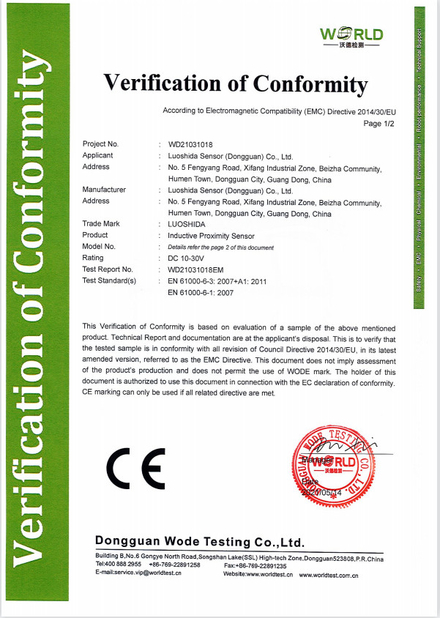
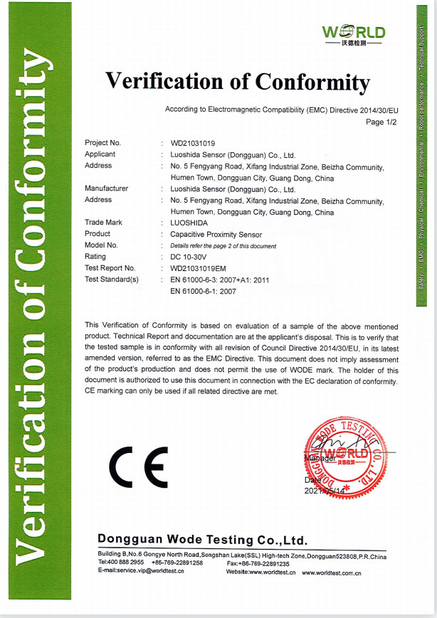
จีน Luo Shida Sensor (Dongguan) Co., Ltd. รับรอง
สนทนาออนไลน์ตอนนี้ฉัน
บริษัท บล็อก
Comparing Inductive and Capacitive Proximity Sensors Key Differences
ข่าว บริษัท ล่าสุดเกี่ยวกับ Comparing Inductive and Capacitive Proximity Sensors Key Differences

In the diverse world of industrial automation sensors, inductive and capacitive proximity switches stand out for their widespread applications. While these two sensor types may appear similar to untrained eyes, their fundamental differences in operation and application make proper selection crucial for optimal performance.

Inductive Proximity Sensors: The Metal Detection Specialists
Core Working Principle

Inductive proximity sensors operate on electromagnetic induction principles. Each sensor contains an internal coil that generates a high-frequency oscillating electromagnetic field when powered. When a metal target enters this field, eddy currents form within the metal, causing measurable changes in the field's amplitude that trigger the sensor's output signal.

Key Characteristics and Applications
  • Material Limitations: Exclusively detects metallic objects
  • Metal Type Differentiation: Varying sensitivity to ferrous (iron/steel) vs. non-ferrous metals (aluminum/copper)
  • Non-Metal Penetration: Can detect metal objects through non-conductive barriers like plastic or wood
  • Environmental Robustness: Highly resistant to dust, oil, and other non-metallic contaminants
  • Output Options: Available in NO, NC, and analog output configurations
Capacitive Proximity Sensors: The Versatile Material Detectors
Core Working Principle

Capacitive sensors utilize electrostatic fields rather than electromagnetic ones. The sensor's internal capacitor plate generates an electrostatic field that changes when any material (conductive or non-conductive) enters its range, altering the system's capacitance and triggering detection.

Key Characteristics and Applications
  • Material Versatility: Detects metals, plastics, liquids, powders, and biological materials
  • Adjustable Sensitivity: Many models feature tunable detection thresholds
  • Penetration Capability: Can detect materials through thin non-conductive barriers
  • Environmental Sensitivity: More prone to interference from surface contaminants
  • Common Applications: Liquid level detection, non-metal part verification, material thickness measurement
Comparative Analysis and Selection Guide
Feature Inductive Sensors Capacitive Sensors
Detection Principle Electromagnetic induction Electrostatic field (capacitance change)
Target Materials Metals only All materials (metals, non-metals, liquids)
Environmental Tolerance High (resistant to contaminants) Low (sensitive to surface conditions)
Sensitivity Adjustment Typically fixed Often adjustable
Price Range Generally lower Generally higher
Selection Considerations
  1. Target Material: Metal-only applications favor inductive; diverse materials require capacitive
  2. Operating Environment: Harsh conditions suit inductive; clean environments allow capacitive
  3. Detection Precision: Capacitive offers finer adjustment capabilities
  4. Budget Constraints: Inductive sensors typically cost less
  5. Installation Factors: Both can detect through barriers, but capacitive is more affected by barrier properties
Internal Design Commonalities

Despite functional differences, both sensor types share similar internal architectures:

  • DC power conversion to AC via oscillator circuits
  • Threshold-based trigger mechanisms
  • Identical output configurations (NO, NC, analog)
  • Standardized form factors (cylindrical, flat, or cubic designs)
Conclusion

Inductive and capacitive proximity sensors each serve distinct roles in industrial automation. Inductive sensors excel in metal detection within challenging environments, while capacitive sensors provide unmatched material versatility and measurement flexibility. Understanding their core differences in detection principles, material compatibility, and environmental tolerance enables optimal sensor selection for any application. As automation technology advances, these fundamental sensor types continue evolving to meet increasingly sophisticated industrial demands.

ผับเวลา : 2026-08-22 00:00:00 >> blog list
รายละเอียดการติดต่อ
Luo Shida Sensor (Dongguan) Co., Ltd.

ผู้ติดต่อ: Mrs. Anna

โทร: 18925543310

ส่งคำถามของคุณกับเราโดยตรง (0 / 3000)